I design and refine leadership and team architectures

Every process has an architecture. Meetings. Decisions. Conflicts. Crisis. If performance is slipping or problems keep repeating, motivation isn’t the solution. Architecture is.


On the surface, everything works, yet decisions stall, accountability blurs, standards slip, teams lose traction. The cumulative cost of small errors becomes unnecessarily high.

When you’re inside the daily noise, it’s hard to see the architecture you’re operating within.


Why the System Cannot See Itself

People inside a system are not just defined by their roles. They are part of its relationships, history, backstage dynamics, past compromises, and consequences.

The longer someone operates within that environment, the more reality is filtered through personal experience. At minimum, this shows up as loyalty and quiet assumptions about how things should work.

This isn’t a flaw. It’s simply an inherent property of any system.


An External Perspective

When internal filters become too strong, an external perspective is required.  The one that is not entangled in relationships, hierarchy, or past compromises.

I am not there to judge. Not there to advise from a distance. And not there to be the smartest person in the room. My position is neutral. I represent no side. I observe the system as it is.

My task is to see its structural reality and, based on objective analysis, refine, adjust, or when necessary, restore the architecture of its processes.

This is not about control or “right answers.” It is about clarity and the ability to act without distortion.


Architecture — A Way of Seeing the Problem

Every organization addresses its challenges. The difference lies in the process - whether issues are handled in fragments or approached as a coherent architecture.

Architecture is not an alternative to training. Although tools such as workshops, coaching, or education are often used, they are not the solution to systemic challenges. Architecture is broader. It is a way of examining a problem, ensuring that work unfolds in the right sequence, within a logical structure, and with full use of available resources toward a durable outcome.

Every nuance within an organization has its own architecture, whether consciously designed or formed over time. Architecture is present in something as simple as how meetings are structured or how internal communication flows. It shapes collective processes within teams and collaboration across functions. Leadership processes themselves consist of countless architectural patterns.

Architecture defines how things are arranged and how they function in practice. It determines not only what happens, but how it happens. How information flows. Where delays occur. Where accountability disappears. And how consequences form.


What I Do

From your side, it’s simple. You describe the situation. I examine it, identify the root cause, and design the solution. In some ways, it resembles the relationship between a doctor and a patient.

This is not an ongoing engagement within a single situation. I enter, do the work, and step out.
The next engagement happens only if a new challenge emerges.

My priority is a durable outcome - not the process itself. Every situation begins with architectural analysis. Only then do tools follow.

Simple cases can be assessed in approximately 30 minutes online. More complex situations require at least a full working day in person.

I work in a full-cycle mode - from architectural diagnosis to a clear action plan and its implementation, maintaining full responsibility for the result.


Architectural Systems I Work Within

I operate across multiple architectural systems within a single organization. Not every problem exists at the same level and not every challenge carries the same scale or intensity. The broader the architecture and the higher the pressure, the less effective standard approaches become.

Team Architecture. Everyday Challenges.
This level of architecture shapes people as a functioning system: behavior, mindset, trust, support, communication, daily decisions. When a problem exists at this level, it manifests in everyday interactions - regardless of how it is labeled, and regardless of whether the team consists of top-tier professionals or mid-level employees. If the architecture at this level is misaligned, performance friction becomes constant.

Leadership Architecture. Everyday Challenges.
Challenges at the leadership architecture level typically hide within: situation analysis, decision-making,  overall situational awareness, control and monitoring, delegation, feedback loops, maintenance of standards... When the issue lives here, even strong teams begin to lose momentum. Attempts to fix the team level architecture within such a situation is wrong. You'll deal with symptoms, not causes.

High-Performance Architecture (Business Special Force Mode)
This advanced level becomes relevant when an organization enters a phase that exceeds normal operating conditions and directly affects its next stage of development. For example:
- launching a new strategic direction;
- implementing a major innovation;
- restructuring a team;
- shifting into a higher-intensity operating mode.
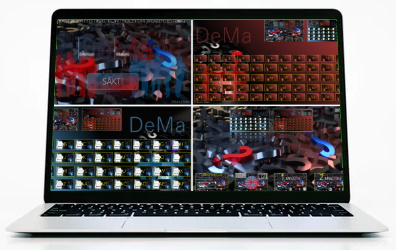
In this level the specific organizational challenge is modeled and simulated. The team trains within elevated cognitive and psychological load, learning to analyze, plan, collaborate, and decide under unpredictable and shifting variables. (HPTGame.com / HPT Architecture)

High-Stakes Architecture. For Highly Complex, Critical Situations.
This level applies when the system is under maximum pressure, approaching a point of no return. Traditional tools have already been used without delivering the required result. Time is limited. Stakes are critical. Information overload and situational chaos prevent clear direction or make it difficult to choose the right course of action. The task is to restore structural clarity, reorganize the architecture, and define the forward decision  (HighStakesArchitect.com)


Work Structure

1. Architectural Diagnosis
I examine how processes actually function (decision flows, accountability, meetings, delegation, communication, behavioral patterns,...) and create an accurate architectural map of the system.

2. Structural Redesign
Based on the diagnosis, I define a correction plan: clarifying mechanisms, accountability boundaries, and process logic.

3. Intervention
I implement the necessary structural adjustments. When required, this may include targeted interventions (from focused training modules to individual leadership sparring).

4. Stabilization
I ensure that the new architecture becomes a stable, functioning mechanism in daily operations,  not a temporary fix.


Architect of Leadership and Team Systems

For over 23 years, I have worked in leadership roles across diverse environments and varying levels of intensity.

I have led structures ranging from 4 to 315 individuals, from single teams to executive groups. My background combines military and business psychology, formal education, and field experience. I have been working in adult development since 2007.

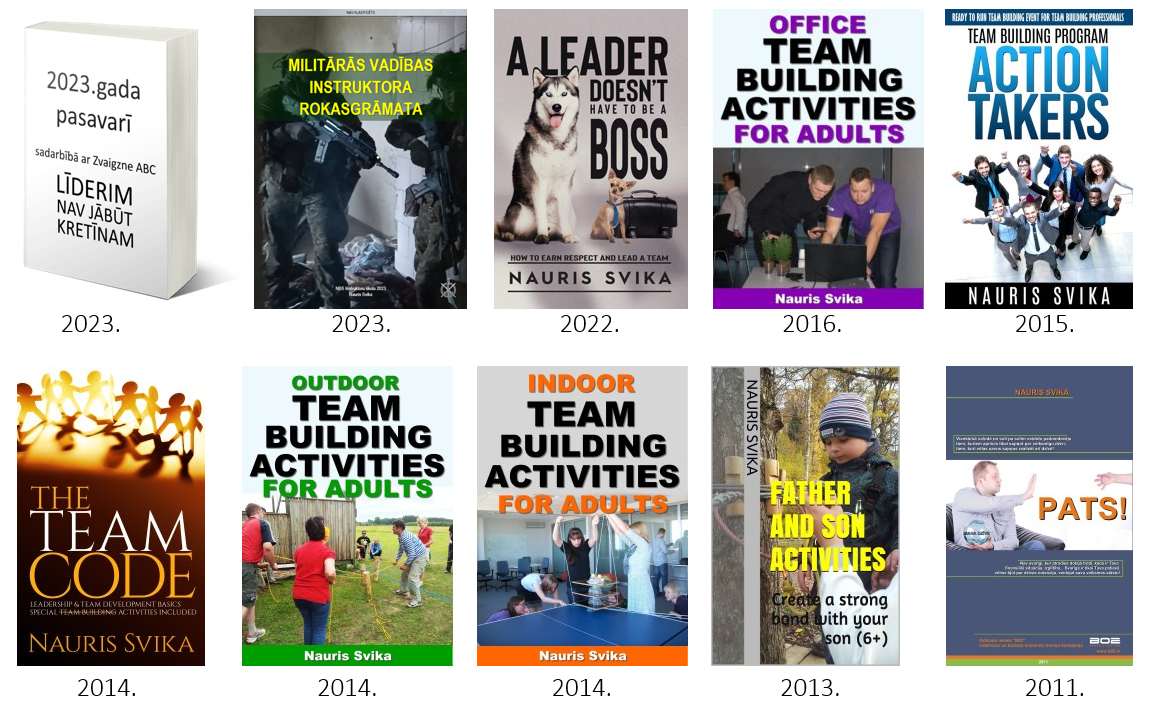
I have delivered more than 1,000 interventions to participants from 28 countries. Author of published works and a regular speaker on leadership and organizational systems.

“Nauris brought structured logic into this complex mix. He first immersed himself in our industry and its specifics, assessed the team and its capabilities, and then defined a clear sequence of steps within a specific timeframe and scope.”
— A. Bilzena, Board Member

“The Mission Command principles provided a strong structure that we could apply in our daily work with the team, helping us achieve the goals we had set.”
— J. Jansone, Head of HR

“The content was exceptionally well structured and precisely tailored to our company’s specific situation and needs. We particularly valued the inclusion of real examples and scenarios, which helped us better understand potential situations and response strategies.”
— I. Bruna-Labane, Head of Talent Development

“The program positively challenged us to work on several critical areas. We stepped out of our comfort zone, thought beyond the usual boundaries, challenged ourselves, and acknowledged both successes and mistakes.”
— A. Saulite, CEO

“The way the program was designed and delivered was unforgettable. At no point was it obvious what would come next or what the final outcome would be.”
— A. Kravalis, Sales Director

“Choosing to work with you was absolutely the right decision. Months after the program, I still hear references to what we experienced during that time.”
— L. Saulite, HR Specialist

E-pasts: nauris[@]naurissvika.com
Tel. +371 26422505

© Copyright Nauris Svika  |  All rights reserved

Page Created with OptimizePress