ARCHITECTURE IN PRACTICE
The situations below are generalized accounts of real engagements. All identifying details (names, industries, locations, and specific circumstances) have been removed / changed to preserve confidentiality. Each account has been reviewed and confirmed by the relevant client one month after the intervention concluded.
The New Start-Up
He came with too many directions. He left with one - and permission to stop chasing the rest.
When the Leader Is the Problem
Situation.
A manufacturing company. Owner and CEO in one person. For years stable. Then, gradually and almost invisibly, the system began sliding out of alignment. An analyst was brought in. Training was arranged. Neither changed anything. Three months before the first projected negative financial results, he reached out. The initial assumption (his own and everyone around him) was that the team was the problem.
Actions.
The intervention began as a one-way conversation. Six separate facts emerged through confrontational discussion. Assembled together, they pointed in one direction. The leader himself was the primary structural problem.
He did not see himself from the outside. By the end of the first day, he was angry and wanted to cancel everything.
The contract had a clause about radical transparency. The situation was laid out plainly, not as a personal accusation, but as architecture: either we continue and find a way through this, or in a few months the money runs out. The choice was his.
He stayed. The architecture was redesigned around him: his strengths, his blind spots, his actual role. A new position was added. Responsibilities were redistributed.
Outcome.
Structural misalignment addressed before losses became irreversible. Redesigned architecture implemented within three months.
The client came convinced the problem was his team. The architecture said otherwise. The hardest part was not finding the solution – it was making it visible to the person who needed to see it most.
When Alignment Is Not Enough
Situation.
A fast-growing company. Top management approached with a request for leadership training. Midway through the engagement, a cyberattack compromised internal systems. Financial data was stolen. Internal trust collapsed. The board became slow, risk-averse, and increasingly bureaucratic. The client wanted tools. The actual problem was the architecture.
Actions.
Two days of independent situation mapping without the leader or the team present. What emerged was not one team under pressure – it was two factions. Suspicion had formed around one team member. It had not been proven. But the architecture was clear: even if trust could be rebuilt, it would take far longer than a fast-growing company could afford.
A 72-hour intervention with the full team followed. The decision was made to replace the position, not on the basis of proven guilt, but on the basis of structural reality. Legal counsel was engaged.
Four critical structural vulnerabilities were identified and prioritized. A reinforcement plan was built and implemented within three months.
Outcome.
Two follow-up sessions confirmed stability. The architecture held.
Nobody wanted to make the call. The architecture made it unavoidable.
When Two Becomes One – The Wrong Way
Situation.
Two tech companies. Company A acquired Company B. Different cultures, different ways of working. People began leaving Company B in large numbers, feeling like the losing side, finding Company A’s culture unacceptable.
The integration was being driven entirely from one direction. Company B was being treated not as an acquired organization but as a department being assembled from scratch.
Actions.
The first intervention began with Company A’s strategic team. The opening 36 hours were sharp. Several confrontational exchanges were directed at the facilitator directly. Neutrality held: there was nothing personal to protect, but they had an investment at risk and people leaving daily, taking institutional knowledge with them.
The team refused to consider bringing Company B representatives into the leadership structure. They viewed them as less qualified, weaker in execution, too people-oriented.
A pre-mortem exercise changed the dynamic. For the first time, the team saw the situation from the other side and in long term. Agreement came, but only after the exercise was completed and its results could not be argued away. Two people from Company B joined the team.
Four months later, the renewed team returned for a second HSA – 36 hours. It did not start smoothly either. The group immediately split along the old A and B lines. The first four hours were spent on that divide alone. What worked: individual 1:1 conversations between every pair in the room.
Outcome.
The first intervention stopped the collapse. The second built the direction.
Two interventions. Between them four months of difficult work. The architecture that emerged was built by people who had fought each other to get there.
When the Numbers Were Hidden
Situation.
A construction group. Two owners, operations across two countries. A CEO was hired from outside – equity shares included as part of the compensation structure. As the CEO took over, both owners gradually stepped back from day-to-day operations. Everything appeared to be running smoothly. For over two years, there was no reason to look closer.
Then small financial discrepancies began to surface. When examined more closely, the picture was significantly worse. The previous six months had been in serious decline. The CEO, fearing dismissal, had been concealing the real figures together with two finance team members, presenting inaccurate reports and hoping the situation would correct itself.
It did not. The owners took direct control. But the organization they stepped back into was not the one they had left. Employees had grown used to the CEO’s leadership. They did not want explanations. They saw dismissals and reduced salaries. Several personal conflicts had already formed between staff and owners before the intervention began.
Actions.
The first 30 hours of the HSA intervention were focused on identifying the most critical structural problems and finding solutions. By the start of the second day, it was clear that the full picture required more time. Two additional days were added.
The complete structural situation was mapped: facts, assumptions, constraints. Within that process, it became clear that one of the two companies could not be saved. The decision was made, remaining finances were consolidated into the stronger entity.
Guidelines for a recovery strategy were then developed – one that could keep the remaining company viable and rebuild relationships with clients who had already turned away.
Unlike most engagements, this one had no resistance. The stakes were high enough that both owners were prepared to do whatever was necessary.
The equity shares granted to the CEO became a separate legal matter handled in parallel.
Outcome.
One year later, the remaining company had closed three large-scale contracts and secured two investments, brought in specifically as guarantees to make those contracts possible. (The Outcome info was added later, it was not clear at the beginning).
The hardest situations are not always the most resistant ones. Sometimes the stakes are simply high enough that everyone in the room already knows there is no other option.
When the Plan Met Reality
Situation.
A company had completed a business continuity plan – developed under requirements from the parent organization. Certified experts had reviewed it. The internal team viewed it as another compliance document. When they brought me in to test it, the atmosphere in the room was closer to a training exercise than a high-stakes intervention.
Actions.
Three days of independent plan analysis without the team present. Significant errors were found: both in the overall architecture and in the operational details.
The testing began. Eight hours of simulated scenarios, each requiring real-time decisions and responses from every crisis management leader. The atmosphere changed quickly.
Discussions turned into arguments. I told you. No, you didn’t. The “record book” (initially dismissed as unnecessary bureaucracy) had to be retrieved repeatedly, because team members could not reconstruct the sequence of decisions, responsibilities, and actions taken.
Then came the blame. Each person saw the situation from their own position. I did my part. This is your fault. The emotional pressure was high.
One principle from military experience was introduced — unfamiliar in business environments but immediately recognized as true once demonstrated: one person’s mistake is everyone’s responsibility. Not because it is fair. Because individual mistakes rarely are individual – they reveal gaps in alignment, communication, and shared standards that the whole system owns.
Four hours of solution work followed. A second full test ran for five hours. No critical failures emerged, only minor variations too diverse to pre-script responses for.
Outcome.
Months later, a real emergency (fire) occurred. The crisis management team responded using the tested plan and the experience gained during the intervention. The company avoided significant financial and reputational damage.
The testing process has since become an annual exercise, involving both primary team members and their designated replacements.
They came in treating it as a game. They left knowing the difference.
Hold. No Matter What.
This is the only situation in this collection where I was in charge – not the architect brought in from outside. I have faced situations of this kind more than once in military and in business as well. Not all of them can be shared.
Situation.
Kosovo. 2004. A remote base. 24 personnel. 40km from the nearest support.
Civil unrest escalated across the country within hours. Intelligence confirmed hostile movement toward the base location. Several nearby bases had already been abandoned and burned. No reinforcements were available. Rules of engagement had not yet been updated for the level of aggression now present.
The base was not built or positioned for this kind of threat.
Actions.
The decision was made to remain.
An aggressive show of force was executed — visible, deliberate, and designed to reach the surrounding villages before the threat arrived. The objective was to signal one thing clearly: these people will not leave. They are prepared to defend.
Outcome.
The only small base / guarded location in the Bde AOR that remained intact.
Twenty-four people. No reinforcements. No permission to act. No guarantee it would work. The decision was made anyway. That is what high stakes actually looks like – not as a concept, but as a moment you cannot undo.
E-mail: nauris[@]naurissvika.com
Tel. +371 26422505
© Copyright Nauris Svika | All rights reserved
OptimizePress Popup Overlay
Grāmatas
"DeMa" - vadītprasmes attīstības gamification e-instruments
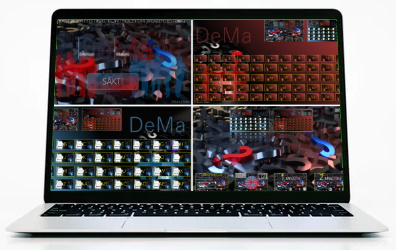
Vadītprasmes attīstības, kontroles un vērtēšanas instruments, kas balstīts uz diskusiju un gamifiaction formātiem. Programma darbojas uz Windows bāzes. Šo formātu iespējams izmantot gan klātienē (piemēram, sanāksmju telpā), gan attālināti (piemēram, izmantojot Zoom un daloties ar ekrānu). "DeMa" primāri paredzēts HR profesionāļiem un vadītāju-vadītājiem, ļaujot pavisam vienkāršā un nepiespiestā veidā gan attīstīt esošās vadītprasmes iemaņas, gan kontrolēt nepieciešamo vadītāju kvalitātes līmeni, gan arī novērtēt potenciālo vadības amatu kandidātu izpratni par nepieciešamiem procesiem. Aktivitāte balstīta uz visdažādāko vadības situāciju izpratni un nepieciešamo rīcību. Pavisam kopā pieejamas 1018 vadības situācijas, kas pieskaras gan komandas iekšējiem izaicinājumiem, gan arī sadarbībā ar klientiem (B2B) un sadarbības partneriem (B2B). Vairāk informācijas https://naurissvika.com/my-dema-3/
Dalība semināros, konferencēs, atvērtās programmās
- LR NAA seminārs "Līderība"
- Atvērtā programma biznesa līderiem sadarbībā ar I.Rajevu "Kurss komandieriem"
- Konference "Iedvesmai un jaudai. Rudens"
- Rīgas izglītības un informatīvi metodiskā centra programma "Mūsdienīgs un efektīvs izglītības iestādes vadītājs."
- "Adventure therapy Latvia" starptautiskā programma "Adventure Therapy meistarklases Siguldā."
- Valsts kancelejas īstenotā augstākā līmeņa vadītāju attīstības programma "“Мēs – vērtību iedzīvināšana komandā.”
- Forums Dānijā "Atpazīsti disaporas uzņēmēju"
- Konference "Cilvēkfaktors"
- Biedrības “Latvijas Pilsoniskā alianse” (eLPA) Rīgas reģiona nevalstisko organizāciju samits.
- Latvijas Akadēmisko bibliotēku asociācijas "Vasaras skola."
- ES Jauniešu projekts "Neiespējamā misija"
- AM un NBS programma "Uzņēmēju atbalsts starptautisko operāciju veterāniem."
- LM ministrijas un Latvijas neredzīgo biedrības ikgadējā jauniešu nometnes.
- Starptautiskā pieaugušo izglītības mentoringa programma "Lead In."
- LR IzM konference "Konkurētspējīgs pedagogs."
- "Live gaming" konference Londonā.